The Best Bleach for White Clothes in 2025
Have your whites turned gray or, worse, yellow? As a washing machine technician, I explain which product to use to restore nuclear whiteness without destroying the fabrics or the rubber seals of your washer.

Clorox Regular Bleach
The only one I recommend for cotton because it protects the fiber while whitening.
In my laundromat, I often see frustrated customers bringing in yellowish duvets or sheets saying: "But I poured a huge splash of bleach on it!". That is precisely the problem. Chlorine bleach (sodium hypochlorite) is a powerful tool, but dangerous if not understood.
To choose the best bleach, we must first understand that today there are two families of products that people call "bleach" but work in opposite ways: Chlorine Bleach (the traditional one) and Active Oxygen (also known as Oxygen Bleach or Color-Safe Bleach).
The 5 Best Options for Whitening
Clorox Regular Bleach with CLOROMAX
The market standard in the US. Unlike generic bleach, Clorox includes technology to protect fabric surfaces and prevent soil adhesion, keeping clothes whiter for longer. It's the safest choice if you must use chlorine.
Strengths
- Includes fabric protection technology
- Maximum whitening power on cotton
- Kills 99.9% of germs
Cautions
- Strong chemical smell
- Not suitable for synthetics or wool
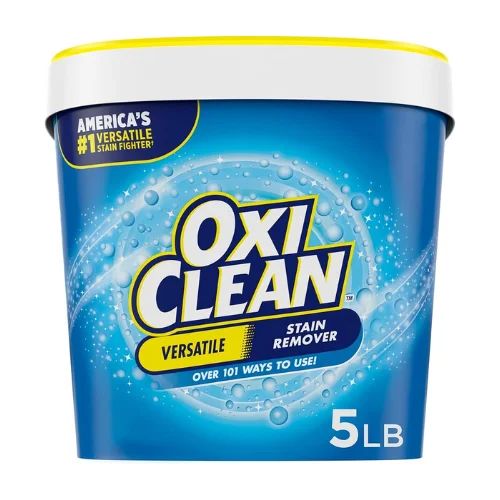
OxiClean Versatile Stain Remover
The modern alternative. Technically not bleach (chlorine), but active oxygen (sodium percarbonate). It is the best option for clothes that are not 100% cotton or have color details. It whitens through a safe chemical reaction, not corrosion.
Strengths
- Safe for colors and synthetics
- Does not damage washer seals
- Restores dingy whites
Cautions
- Needs warm water (>104ºF) to activate well
- Slower than chlorine bleach
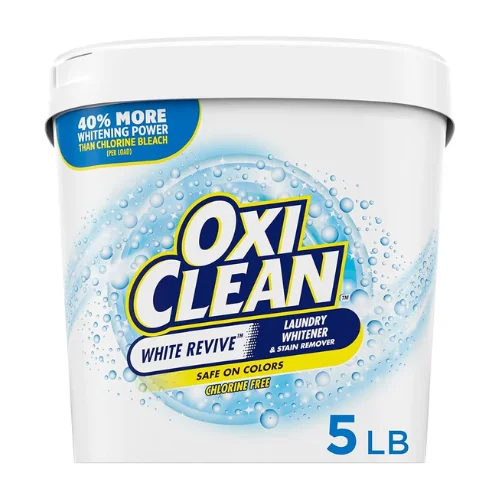
OxiClean White Revive Laundry Whitener
The specialist for 'dingy' whites. This is chlorine-free bleach alternative specifically formulated with enzymes and optical brighteners to revive dull sheets and shirts. Claimed to be 40% more whitening power than chlorine bleach without the risk.
Strengths
- Safe on most fabrics
- No yellowing risk
- Effective in all temperatures
Cautions
- More expensive per load
- Scented (may bother sensitive noses)
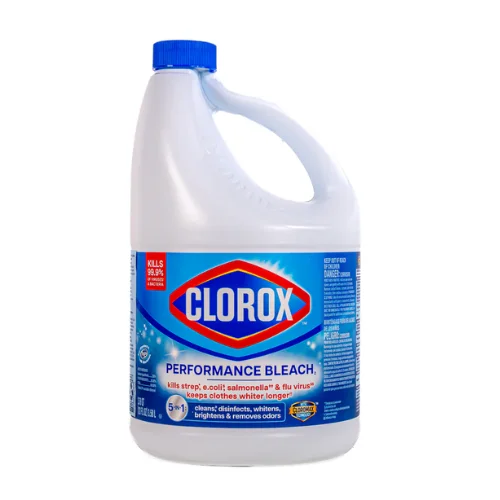
Clorox Performance Bleach
Raw power for large volumes. If you have a rental property, a motel, or lots of heavy cotton bedding, Clorox Performance offers excellent value. It is more concentrated for heavy-duty disinfection and whitening.
Strengths
- Very competitive price
- Great disinfecting power
- Multipurpose (floors and clothes)
Cautions
- More aggressive on fabrics long-term
- Heavy bottles
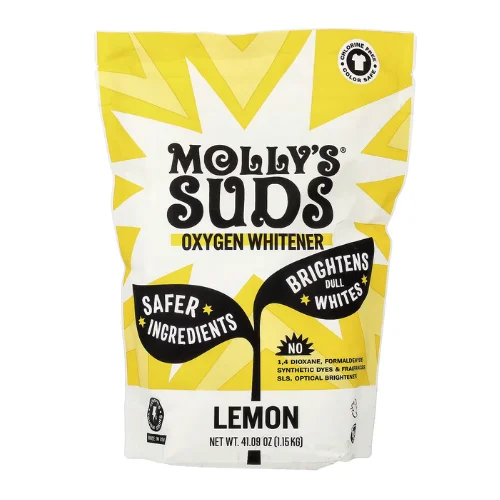
Molly's Suds Oxygen Whitener
The expert's secret, branded for home use. It's basically pure sodium percarbonate with essential oils. Eco-friendly, safe, and brutally effective if used with hot water. Breaks down into water, oxygen, and soda ash.
Strengths
- 100% Natural & Eco-friendly
- Safe for septic systems
- No harsh fumes
Cautions
- Premium price
- Requires hot water for best results
Technician's Guide: Chlorine vs. Active Oxygen
This is where most people make mistakes and ruin clothes. A wine stain on a cotton tablecloth is not the same as a sweaty collar on a synthetic shirt.
💧 Traditional Bleach (Chlorine)
It is sodium hypochlorite. It works by aggressive oxidation. It burns off the surface layer of dirt.
- ✅ Ideal for: 100% white cotton sheets, towels, mold.
- ❌ Danger: Yellows polyester, wool, and silk. Eats washer seals.
- 🌡️ Temperature: COLD water (heat deactivates chlorine).
✨ Active Oxygen (Non-Chlorine)
Usually percarbonate. On contact with water, it releases oxygen bubbles that lift dirt.
- ✅ Ideal for: Synthetic clothes, colored items, organic stains, and maintenance.
- ❌ Danger: Less powerful for instant disinfection.
- 🌡️ Temperature: HOT water (min 104°F, ideal 140°F).
Warning: Your Washer Suffers
As a repairman, I have to warn you: chlorine bleach corrodes metal and rubber. The drum spider (the piece that holds it from the back) is usually an aluminum or zamak alloy. Chlorine abuse corrodes this piece until it snaps, and the repair is so expensive it usually involves scrapping the washer.
Golden rules to protect your machine:
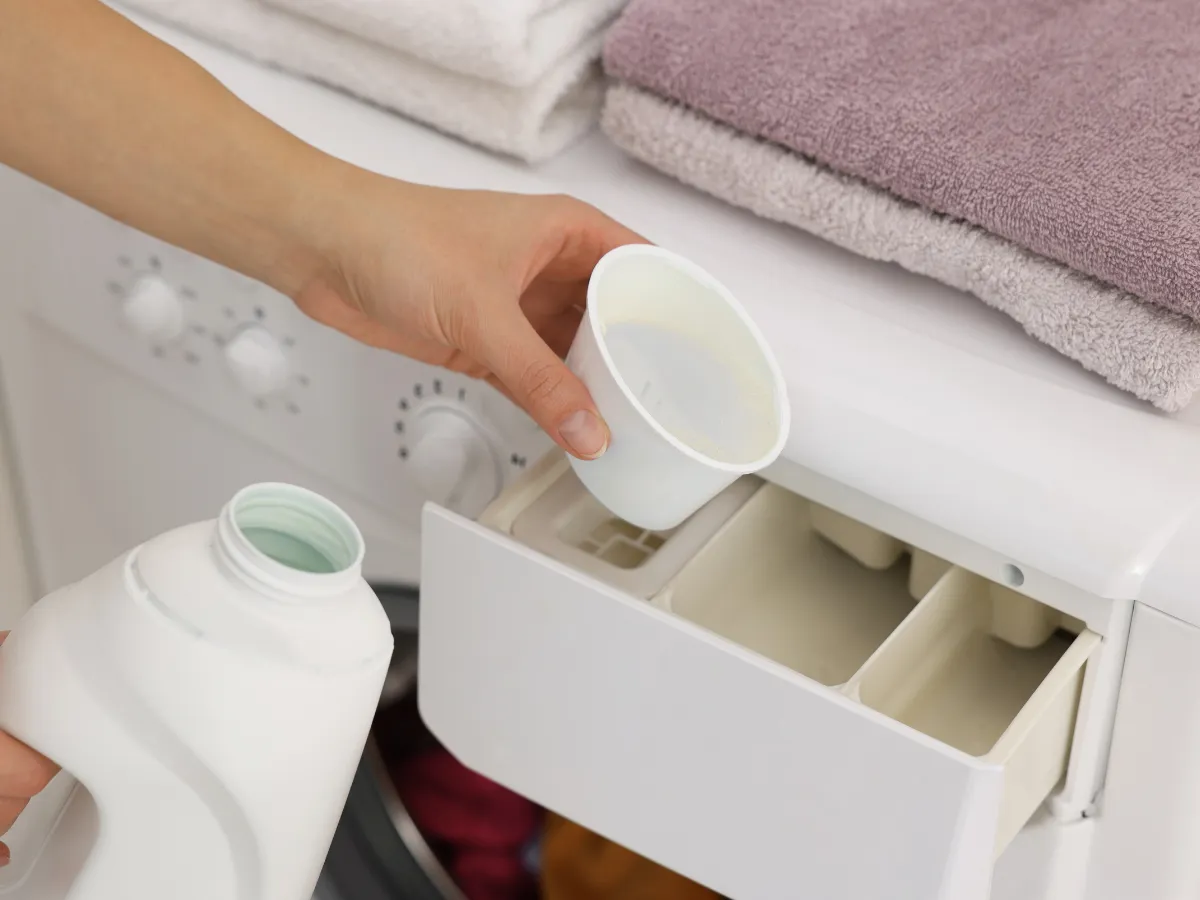
- Always use the dispenser marked with a triangle (🔼) or "CL". Never pour directly onto dry clothes.
- Do not exceed 1/2 cup per load.
- If you use bleach frequently, do a maintenance wash empty at 194°F (90°C) once a month to clean residue.
Frequently Asked Questions
Why do I get yellow spots after using bleach?
It can be for two reasons: the garment had polyester (bleach burns plastic and turns it yellow) or had traces of sunscreen/sweat. Bleach reacts chemically with sweat proteins creating a yellow stain impossible to remove. In those cases, always use active oxygen.
Can I mix bleach with detergent?
Yes, the washing machine does it automatically. But NEVER mix bleach with ammonia, vinegar, or acids. That mixture creates chloramine gases which are highly toxic and can send you to the hospital.
Does bleach disinfect in cold water?
Yes, in fact, chlorine bleach works best in cold or warm water. Very hot water evaporates chlorine before it takes effect and can increase corrosion. To disinfect with heat, it is better to use 60ºC (140ºF) cycles with active oxygen.