How Many Liters of Water Does a Washing Machine Really Use?
You open your water bill, or perhaps you're simply starting to worry about the environment, and you ask yourself: "How much water goes down the drain every time I do a load of laundry?" It's a question I get asked a lot, both by customers at the laundromat and by people whose appliances I repair at their homes. And the answer has changed a lot in recent years.
So you don't waste time, here is the quick answer on how many liters of water a domestic washing machine consumes nowadays:
- 💧 Modern/Efficient Washers (Class A): Consume between 35 and 50 liters (~9-13 gallons) per full wash.
- 🚱 Standard Washers (5-10 years old): Range between 50 and 60 liters (~13-16 gallons).
- 🦖 Old Washers (+15 years): Can skyrocket to 80 - 100 liters (~21-26 gallons) or more per cycle.
As you can see, if your washing machine is old enough to vote, it might be using twice as much water as a current one. But consumption doesn't just depend on the age of the machine; there are technical factors I see daily in the workshop that influence it heavily. Let's analyze them.
Consumption Breakdown: What Do These Liters Depend On?
Not all loads use the same amount. When I open the "guts" of a modern washing machine, I find turbidity sensors and flow meters that old ones didn't have. This makes consumption vary according to three key factors:
1. Load Capacity (Kg)
It's pure logic: a bigger drum needs more water to soak all the clothes. However, large machines are usually more efficient per kilo of clothes. These are the usual ranges for the Eco program:
- 5 kg Washers: Approx. 39 - 52 liters.
- 7 kg Washers: Approx. 42 - 62 liters.
- 8-9 kg Washers: Approx. 48 - 54 liters.
- Large load Washers (10kg+): Between 55 and 65 liters.
2. Load Type: Front vs. Top?
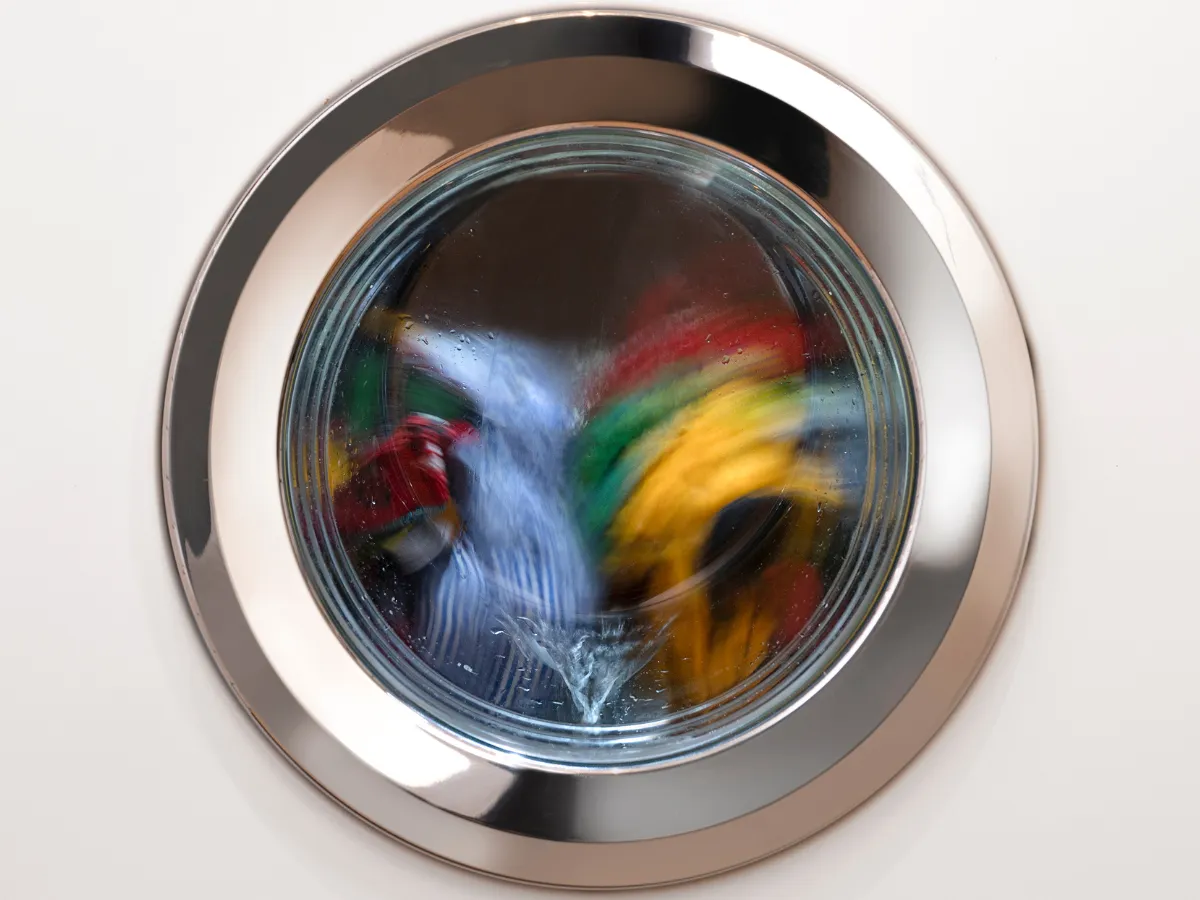
There is a major technical difference here. Front-loading washing machines (the ones with the round porthole) use gravity to wash: clothes go up and fall into the water. This allows them to use much less water, as they don't need to fill the drum completely.
In contrast, many top-loading washing machines (especially the American style with a central agitator, though less common in modern Europe) need to submerge the clothes almost completely, which can drive consumption up to more than 100 liters per cycle, even in models that aren't that old.
3. The Chosen Program (The Time Paradox)
This is the number one mistake I see in households. Many people think: "I'll use the quick 30-minute program because, since it's shorter, it will waste less water." Wrong!
- Quick Program: To wash in 30 minutes, the machine doesn't have time to let the water penetrate gently. It needs to fill the drum more and perform aggressive rinses to get the soap out quickly. It uses more water and energy proportionally.
- Eco 40-60 Program: It might last 3 hours, yes. But it uses that time to soak the clothes with very little water and recirculate it (taking it from the bottom and spraying it from the top like a shower). In the end, it uses about 45 liters compared to the 60-70 of a synthetic or misused quick cycle.
The Definitive Data: Check the Energy Label
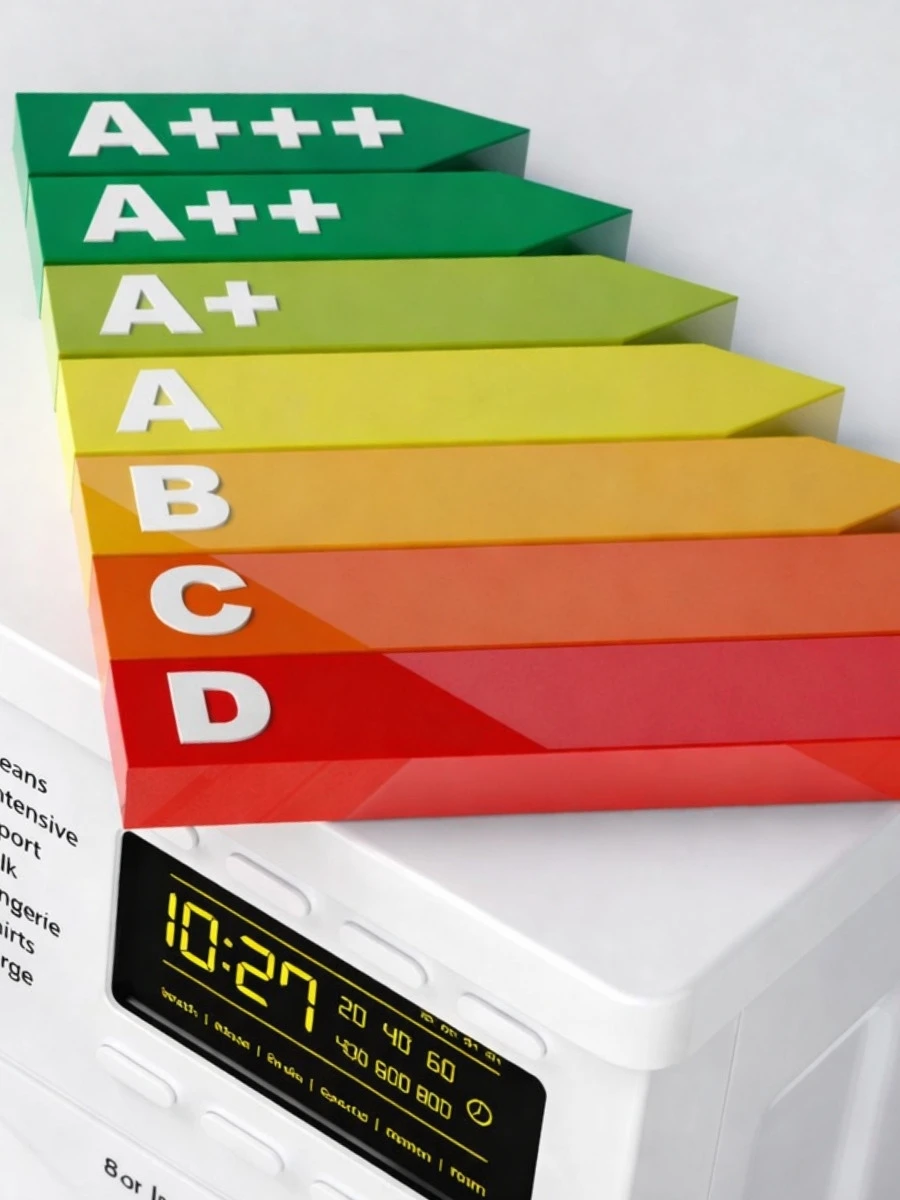
Since March 2021, the European Union has made it easy for us. No more guessing. If you are going to buy a washing machine or yours is recent, look at the colored sticker.
In the bottom left of the label, you will see a blue tap icon with a number under it. That number indicates the liters of water consumed per cycle in the Eco 40-60 program. It is the most reliable data that exists because it is standardized by law. If your label says "48", your washer uses 48 liters in that program, no more, no less.
Calculate Your Monthly Expense: How Much Does Water Cost?
Let's bring this down to earth with real numbers. Suppose you have an efficient washer (45 liters/cycle) and you do about 5 washes a week (20 a month).
45 liters x 20 washes = 900 liters per month.
900 liters = 0.9 cubic meters (m³).
In Spain (where we are based), the price of water varies, but assuming an average of roughly €1.90 per m³, you would spend less than 2 euros a month on water to wash clothes.
Where is the problem then? The real problem isn't the cost of the water itself, but the energy needed to heat it. If you use 100 liters instead of 50, your heating element has to heat double the volume of water, and that definitely spikes the electricity bill. That's why it's vital to know how much electricity a washing machine consumes.
How to Save Water in Every Wash (Technician's Tricks)
Beyond buying a new machine, there are things you can do today:
- Fill the Drum (But Wisely): Wait until you have enough clothes. Two half loads use double the water of one full load. However, always leave a hand's width of space at the top. If you pack it too tight, water won't circulate, and you'll have to re-wash.
- Watch the Foam: If you use too much detergent, the washer's sensors detect excess foam and activate automatic extra rinses. You'll be throwing liters of water away just for using too much soap.
- Avoid Prewash: Unless the clothes are covered in mud or mechanic's grease, prewash is unnecessary in 90% of cases. You save a whole load of water by skipping that step. Read more about when to use prewash here.
- Maintenance: A dirty filter or clogged drain can fool the pressure switch (the water level sensor) and make the machine load more water than necessary.
Frequently Asked Questions
Is it true that washer-dryers use more water?
Yes, and be very careful with this. Many washer-dryers use cold water to condense the steam during the drying phase. This means they use water to wash (about 50L) and water again to dry (another 30-60L). A full wash+dry cycle can easily go up to 100-120 liters.
Does hand washing use less?
Almost never. To wash 7 kg of clothes by hand and rinse them well (without leaving soap residue that irritates the skin), you would need to fill and empty the sink or basin several times. It is estimated that manual washing of that amount of clothes consumes more than 100 liters, compared to 50 for the machine.
What if my washer is a top loader?
Check its spec sheet. If it's a modern European model without an agitator, consumption will be similar to front loaders. If it's an old model or American style with a central pole, be prepared for much higher water consumption.
Understanding your washing machine's consumption not only helps you save a few euros at the end of the year, but also extends the life of your appliance by using it correctly. Less water to heat means less limescale on the heating element and less work for the drain pump.

Sebastián R.
More than 10 years at the helm of Lacolada Lavanderia Autoservicio Ponferrada and repairing industrial and domestic machinery in my spare time. You won't find unverified theories from the internet here, just real solutions tested by someone who gets their hands dirty every day.
Other Articles That Will Help You Save
How Much Electricity Does a Washer Use? (Cost/Month)
Analysis of the real electrical cost of running the washer and how to save on the bill.
What is Prewash and When Should You Use It?
Discover when it's necessary to spend extra water on prewash and when to avoid it.
What is the Spin Cycle: RPM and Humidity
Understanding the spin cycle is key to avoiding wasted money on drying later.