Winter in El Bierzo and the Drying Crisis

Many people think their washing machine isn't spinning well or that they used too little detergent. But, I assure you that the "culprit" is not inside your appliance, but on the other side of the window. My grandmother, who spent her life among fabrics in her haberdashery, used to say: "In this valley, the fog not only wets the street, it also gets into the closets."
Today I'm going to explain to you, , from my laundry in Ponferrada without boring technicalities but with physics in hand, why we suffer this "drying crisis" in El Bierzo and what real tricks you can apply at home so your clothes don't end up smelling stale.
Ponferrada's Climate "Trap"
To understand why your jeans take forever to dry, we have to look at our climate. We are in an interior valley with a sub-humid Mediterranean continental climate. What does this mean in practice? That we have long, cold and, above all, humid winters.
The data doesn't lie: in January, the average temperature is around 4.9 °C (41°F), but the key figure is the Relative Humidity, which often exceeds 80% or even 90% on days with thick fog. We live in an atmosphere that is already "full" of water.
The physics of the full glass
Imagine that the air on your terrace is a glass. The process of drying clothes basically consists of water passing from the fabric to the air (evaporation). But if the air (the glass) is already 80% full of water due to fog, there is barely room for anything else.
Furthermore, cold air has much less capacity to "drink" water than hot air. That is why, on cold and humid days in Ponferrada, hunger meets the desire to eat: air that does not admit more moisture and temperatures that do not help evaporate. The result: saturation and cold clothes.
The Mistake of Drying Inside the House
Given this scenario, the logical reaction is to bring the drying rack into the living room. And this is where the serious problems begin. By bringing wet clothes into a closed room (so as not to lose heat), you are skyrocketing the indoor humidity.
The air around the clothes becomes saturated immediately (an invisible micro-cloud is created around your sheets) and drying stops. That excess moisture ends up condensing on the windows or, worse yet, breeding mold on the walls. If your clothes have already started to smell, I recommend reading my article on how to solve the smell of dampness in clothes, where I explain how to save those garments.
Industrial Dryer vs. Drying Rack: The Thermodynamic Battle
Sometimes people ask me what magic LaColada machines have to dry in 20 minutes what takes three days at home. It's not magic, it's airflow management. A domestic dryer (or a radiator) simply heats the air. An industrial dryer actively fights against Bierzo physics:
- Massive airflow: The machine constantly renews the air touching the clothes. It never lets it "saturate" around the fiber.
- Moisture extraction: We expel humid air to the street and bring in fresh air. It's as if you changed the "glass of water" every second.
- Mechanical force: The drum movement opens the fibers so that the air reaches the heart of the garment.
Technician Tricks for Drying at Home (If you have no choice)
If you can't come to the laundromat and have to dry at home no matter what, here are my professional tips to optimize the process and avoid disasters:
1. The washing machine is the key
Drying starts with washing. Always use the maximum spin cycle your clothes allow. Removing water at 1200 or 1400 revolutions is infinitely cheaper and faster than trying to evaporate it later. If you want to delve deeper into this, take a look at what the spin cycle is and how it affects drying.
2. The "Rainbow" Technique
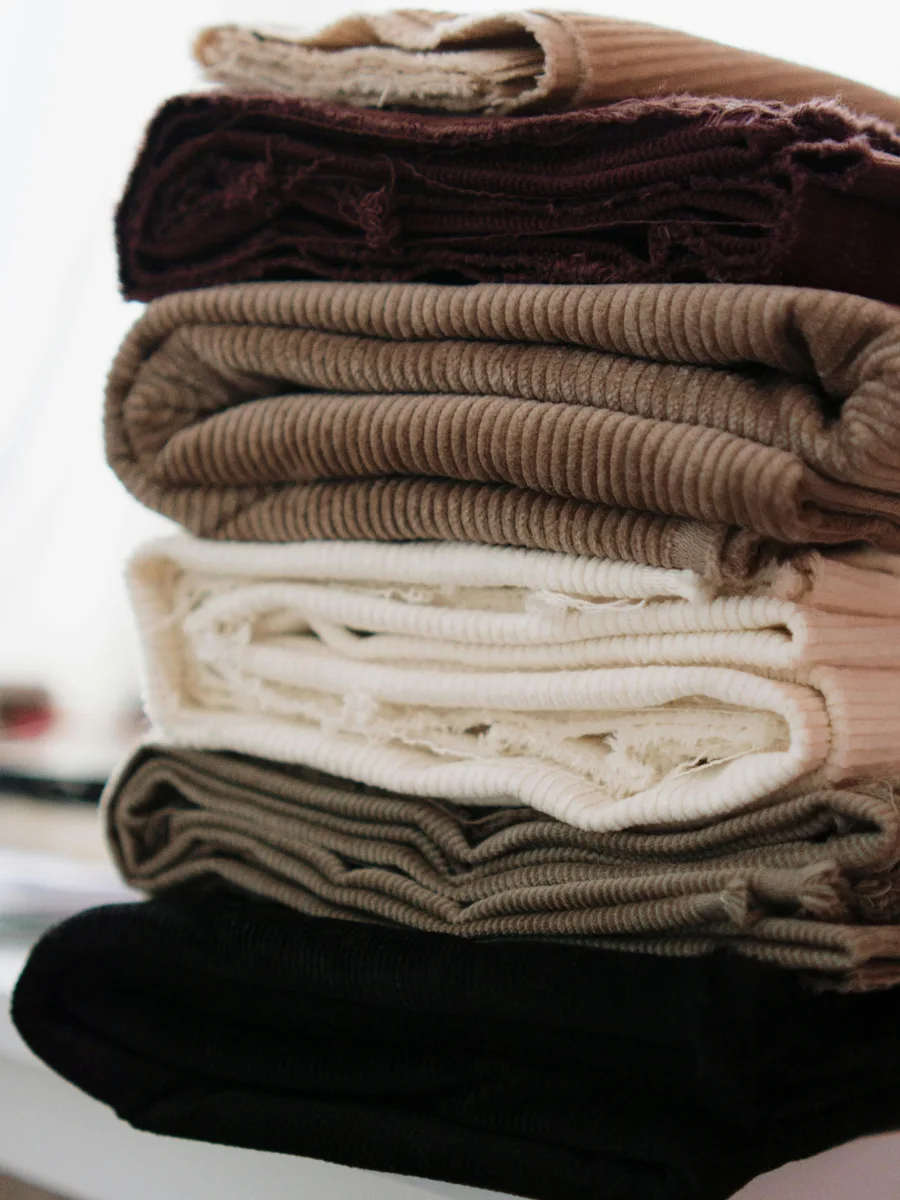
Don't bunch up the clothes. Leave space between items. Use the rainbow or "U" technique: hang the longest items (pants, large towels) at the ends of the rack and the shortest ones (underwear, socks) in the center. This creates a natural tunnel that favors air circulation.
3. Extra help: Dehumidifier and Fan
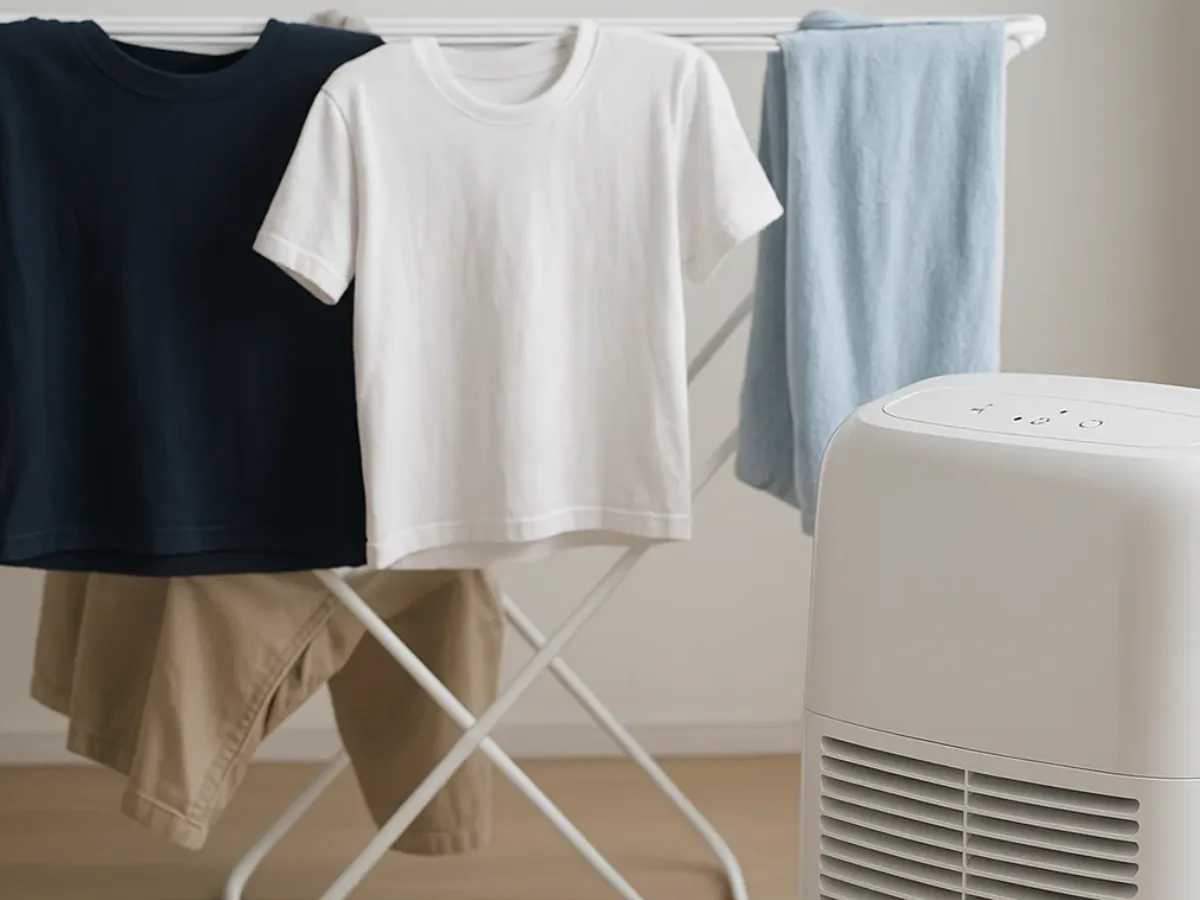
Forget about putting clothes on the radiator (you'll ruin the clothes and the gas bill). The best thing is to place the drying rack in the warmest room, but use a dehumidifier nearby. It is the only way to "empty the glass" of indoor air. If you don't have one, a simple fan pointing at the clothes also accelerates the process by breaking the layer of saturated air.
4. Hangers are your friends
Shirts, t-shirts, and sweatshirts dry much better hung on hangers directly on the rack or on a door frame. Air circulates inside and out, and you save yourself ironing in the process.
In short, drying clothes in Ponferrada in winter is a risky sport, but understanding how humidity works, we can mitigate the damage. And if the rain doesn't let up and the mountain of clothes overwhelms you, you know where we are to dry everything in half an hour.

Sebastián R.
More than 10 years at the helm of Lacolada Lavanderia Autoservicio Ponferrada and repairing industrial and domestic machinery in my spare time. You won't find unverified theories from the internet here, just real solutions tested by someone who gets their hands dirty every day.
More tips on clothing care

Does your laundry smell damp? The definitive solution
That 'wet dog' smell isn't dirt, it's a slow drying problem. I explain how to eliminate it forever.
Drying clothes with a dehumidifier: Does it really work?
Given the impossibility of opening windows in the Bercian winter, this device can be your best ally.
The secret of the spin cycle for fast drying
As a technician, I explain why mechanically removing water is cheaper and more efficient than any heat method.