The History of Washing Machines: From the River to the Chip (Complete Timeline)
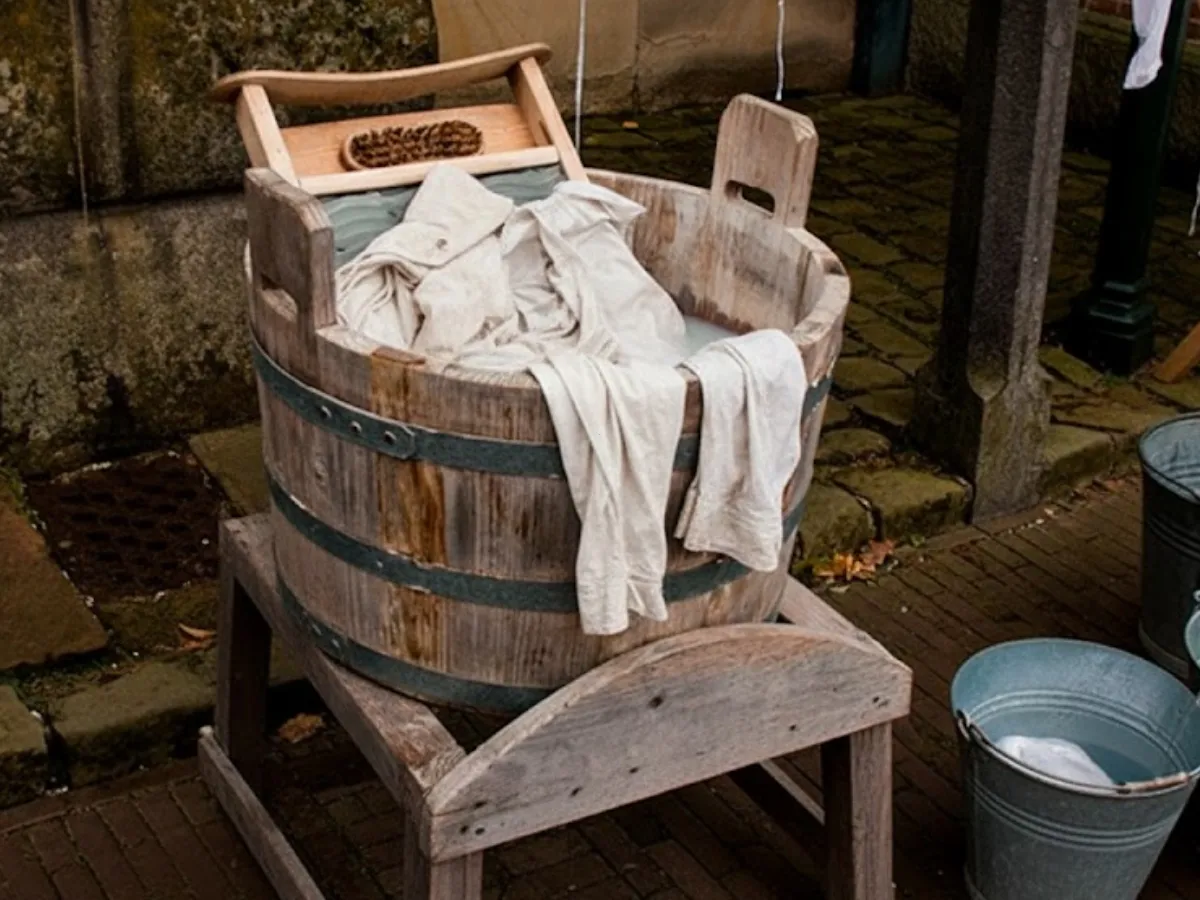
Nowadays, we throw clothes into the drum, press a button, and go for a coffee. But not so long ago, right here in El Bierzo, "doing the laundry" meant going down to the river or spending hours at the municipal washhouse, scrubbing heavy sheets with freezing water and lye soap. As a technician who has been looking into the guts of these machines for years, I assure you that the history of the washing machine is much more than the evolution of an appliance: it is the story of how we reclaimed our life time.
It is often said that the washing machine has done more for the liberation of domestic work than any other invention (even more than the internet, according to some economists). But who had the idea of putting clothes in a spinning box? How did we go from the hand crank to spinning at 1,200 revolutions? Let's review the technical milestones that made it possible so you don't have to break your back washing clothes today.
1. Before the Machine: Physical Effort
For centuries, washing was synonymous with beating, scrubbing, and wringing. The mechanical goal was always the same as the one we apply today: to force water and soap through the fabric fibers to dislodge dirt. The difference is that back then, the energy was supplied by human arms.
In the late 18th and early 19th centuries, the first patents began to appear. They weren't washing machines as we imagine them, but wooden boxes with levers or rollers trying to mimic the movement of the human hand.
- 1797: Nathaniel Briggs receives an early patent in the USA, although the design was lost in a fire.
- 1851 (The Drum): James King patents a key invention: a rotating drum. It was still moved by hand with a crank, but it introduced the concept of rotation that we use in all modern machines.
- 1874 (The Gift): William Blackstone builds a machine for his wife's birthday. It is considered the first washing machine designed specifically for domestic use and sold massively (at $2.50 at the time).
2. The Electric Revolution: The "Thor" (1908)
Here is where the history gets interesting from a technical point of view. Coupling a motor to a water drum seems obvious today, but in the early 20th century, it was cutting-edge engineering... and quite dangerous.
Alva J. Fisher and the Hurley Machine Company are credited with launching the Thor around 1908 (patented in 1910). It is widely recognized as the first commercial electric washing machine.
Technician's Note:
The Thor featured a galvanized drum and an electric motor, but it had a major design flaw: the motor wasn't properly waterproofed. In those early models, water would splash onto the electrical components, frequently causing short circuits and shocks. Fortunately, safety has improved a lot since then.
3. 1937: The Birth of the Automatic Washer
It is important not to confuse "electric" with "automatic." Early electric washers spun on their own, but you had to fill them with water, stop them, drain them, and manually pass wet clothes through dangerous rollers to wring them out.
The real paradigm shift came in 1937 with the Bendix Corporation. They introduced the first domestic automatic washing machine.
- Integrated Cycle: It could wash, rinse, and spin in a single process without anyone touching it.
- Design: It already showed modern features with front loading and a porthole door.
- The Problem: They lacked modern suspension. When spinning, they vibrated so much that they had to be bolted to the floor so the machine wouldn't "walk" across the room.
4. Spain and the 1966 Milestone
While the automatic washing machine became popular in the US after World War II, adoption in Spain was slower due to the economic context.
Although turbine and roller models already existed (imports or semi-manuals), the key year is 1966. The Zaragoza-based brand Balay began manufacturing the first national automatic washing machine, the T-500 model.
This milestone marked the progressive end of public washhouses in Spanish towns and cities. The washing machine ceased to be an imported luxury and became a standard in kitchens, freeing up millions of hours of manual labor for Spanish families.
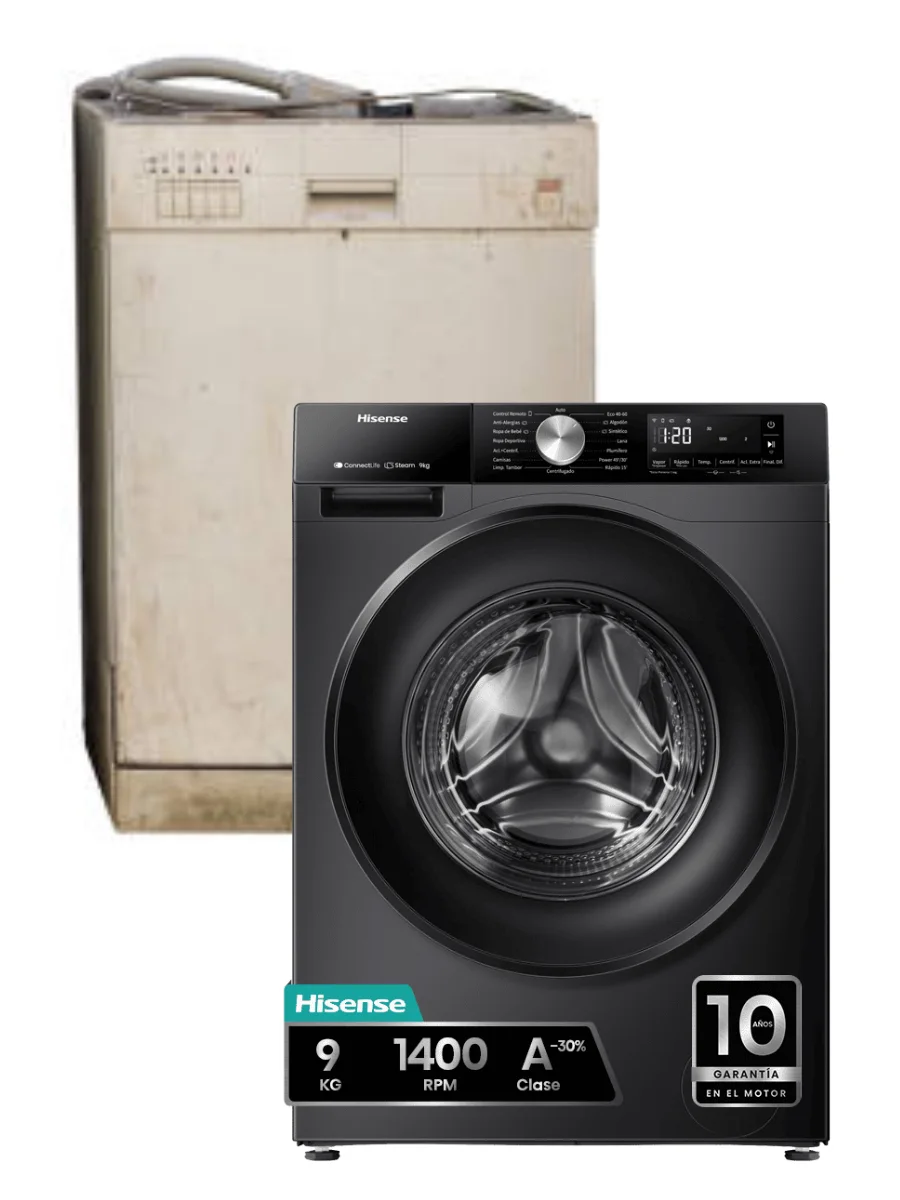
5. From Mechanics to Electronics: The Present
From the 90s to today, the change hasn't been so much in the concept (water + soap + movement) as in the management.
- Microprocessors: Replaced mechanical programmers (that wheel that went "click-click-click"). Now sensors weigh the clothes and decide how much water to use.
- Efficiency: An old washer could waste 100 liters (26 gallons) per cycle. Modern ones optimize every drop.
- Revolutions: We have moved from gentle spins to speeds of 1,200 or 1,600 rpm, leaving clothes almost dry.
As someone who repairs these machines, I'll tell you something: the old ones were mechanical tanks that were easy to fix, but current ones are computers that wash. They are more delicate, but infinitely more efficient and careful with your clothes.
Historical FAQs
Who invented the washing machine and in what year?
Early patents exist like Nathaniel Briggs' (1797), but Alva J. Fisher is considered the inventor of the modern commercial electric washing machine, the "Thor", around 1908-1910.
What was the first automatic washing machine?
It was introduced by Bendix Corporation in 1937. It was the first capable of performing washing, rinsing, and spinning sequentially without human intervention.
When did the washing machine become popular in Spain?
Although there were earlier models, massive popularity began in the late 60s, with the start of national manufacturing of automatic washing machines by Balay in 1966.

Sebastián R.
More than 10 years at the helm of Lacolada Lavanderia Autoservicio Ponferrada and repairing industrial and domestic machinery in my spare time. I like to know the history of the machines to better understand how to fix and optimize them today.
More About Machinery and Washing
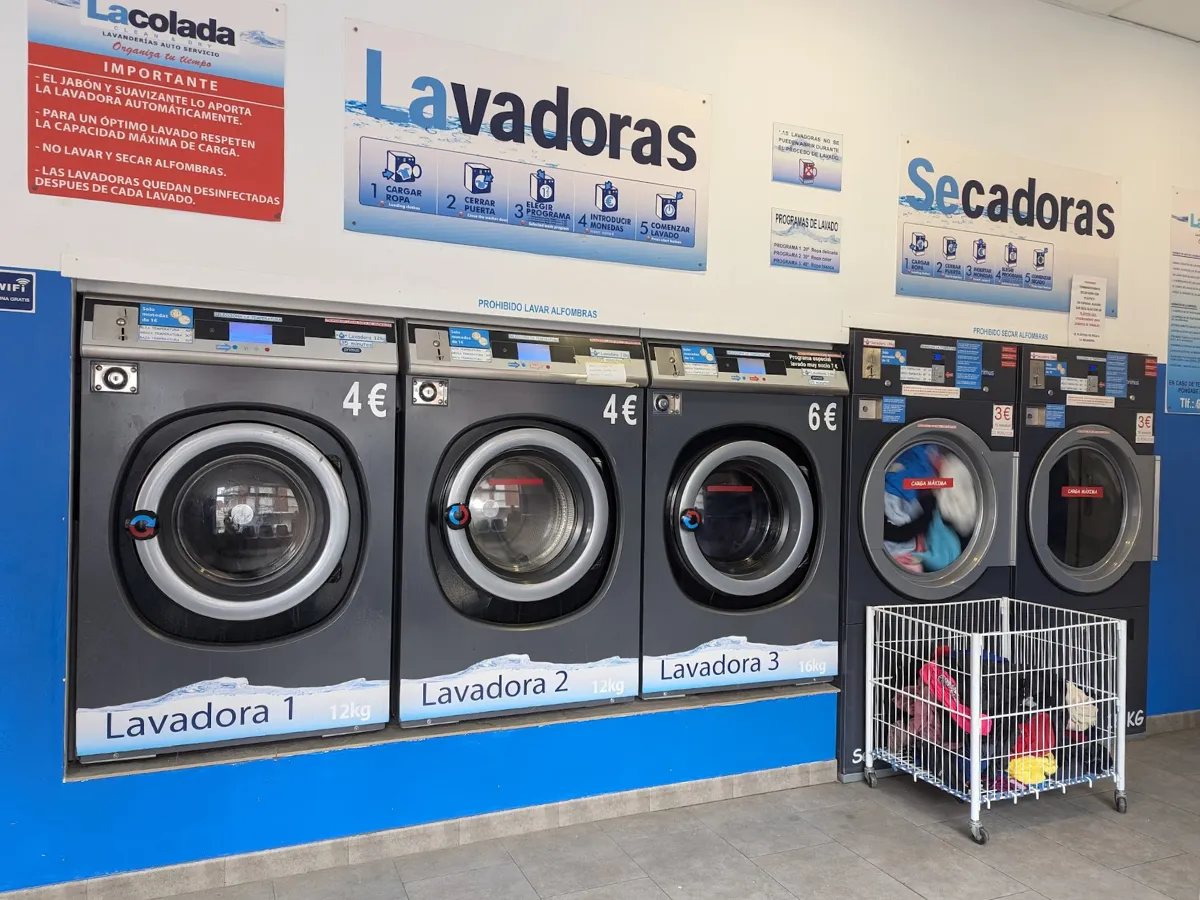
How a Self-Service Laundromat Works
Quick guide to using our facilities if it's your first time.
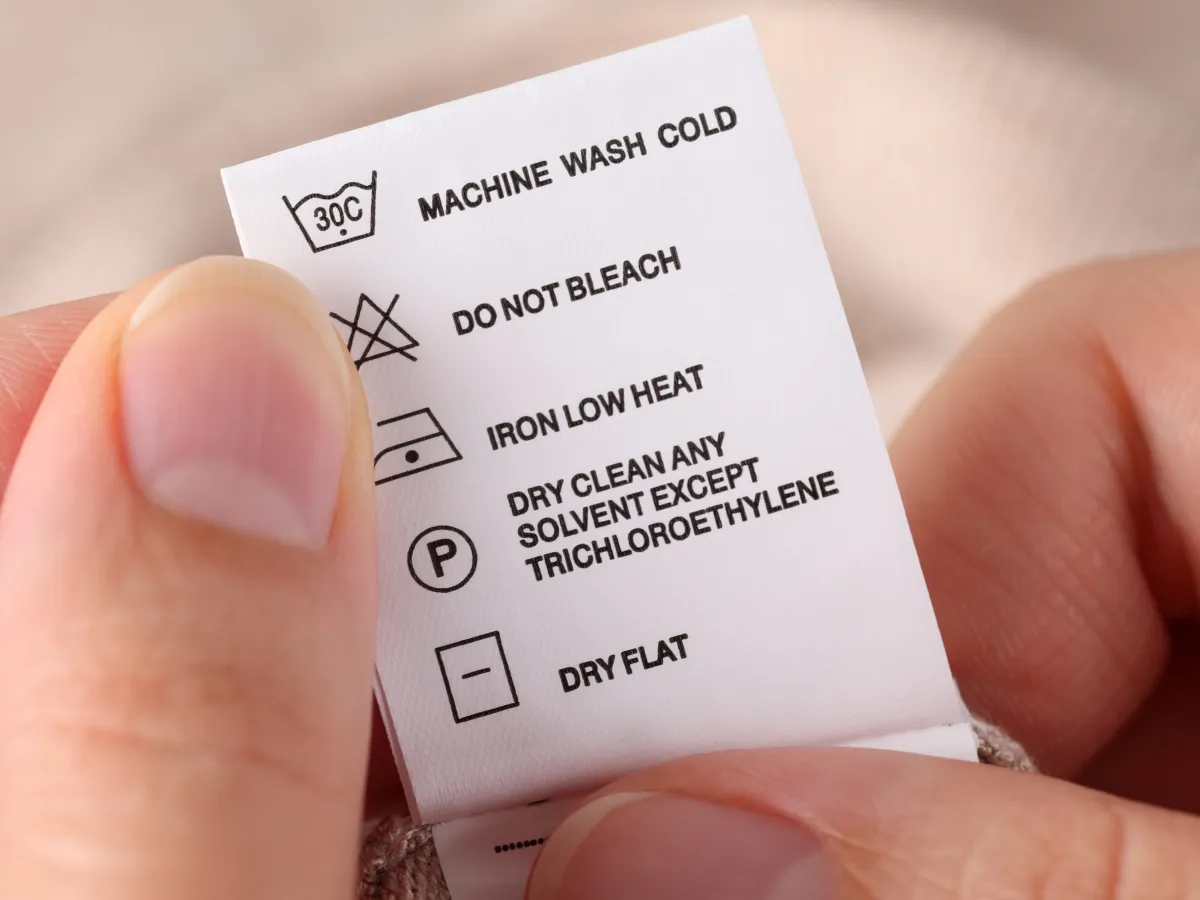
Learn how to read the symbols on your clothes to avoid ruining them.