Industrial Laundry Detergent: Expert Guide to Not Wasting Money
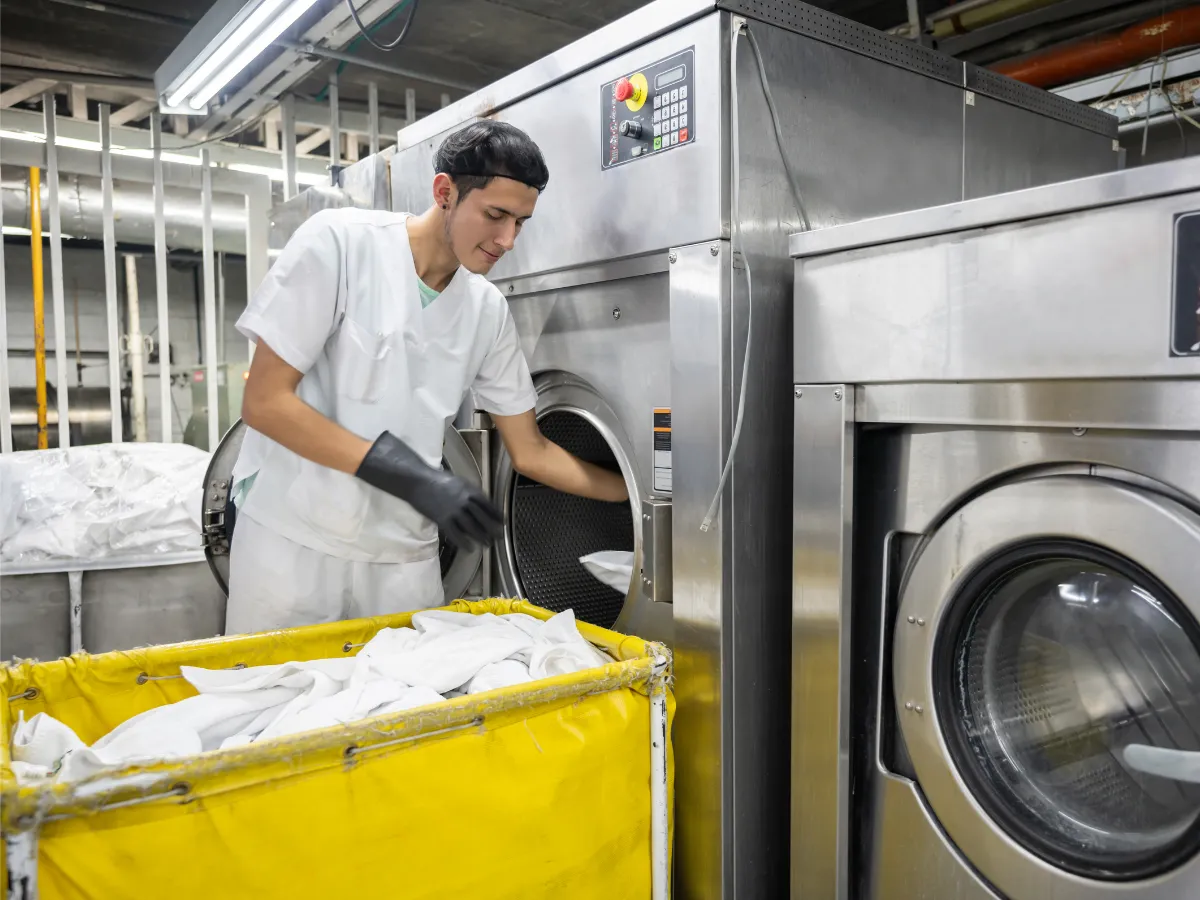
I've been managing LaColada in Ponferrada and repairing machinery for other businesses for over a decade, and if there's one thing I'm clear about, it's that industrial laundry detergent is the lifeblood of our business. You can have the best Miele or Girbau machines on the market, but if you use mediocre soap, the result will be mediocre. And what's worse: you will lose clients and shorten the life of your equipment.
Many entrepreneurs starting out or even individuals with large families ask me: "Is it worth buying those 25-liter drums? Do they clean better or is it just marketing?". Today I'm going to break down industrial chemistry from my experience, without boring technicalities, so you know what you are really buying.
What is Industrial Detergent Really?
It's not simply "Marseille Soap in bulk." The formulation is completely different from supermarket soap. Industrial detergent is designed for:
- High concentration: While at home you use a whole capful, here we talk about milliliters per kilo of clothes. The goal is to reduce cost per wash and storage space.
- Extreme conditions: It must work in short cycles (30-40 minutes), with cold or very hot water, and often with hard water loaded with lime.
- Machinery protection: They include anti-corrosion additives and lime sequestrants to prevent heating elements and valves from filling with scale.
Types of Industrial Detergent: Which One Do I Need?
In the professional world, there is no "one size fits all." Depending on your business (hotel, restaurant, self-service), you will need different chemistry.
1. Alkaline Detergents (The "All-Terrain")
These are the most common for very dirty laundry (restaurant linens, work clothes). They have a high pH that helps "open" the fiber and saponify fats (convert fat into soluble soap). They are very effective but somewhat aggressive with delicate fabrics.
2. Enzymatic Detergents (The "Biologicals")
They contain enzymes (proteases, lipases, amylases) that "eat" biological stains like blood, egg, sauce, or sweat. They are essential in nursing homes, hospitals, and for sportswear. They work best at medium temperatures (30º-50ºC / 86º-122ºF).
3. Neutral Detergents (The "Delicates")
This is what we use at LaColada for our customers' street clothes. They have a balanced pH (close to 7) that respects colors and natural fibers like wool or cotton. They clean daily dirt well without wearing out the garment.
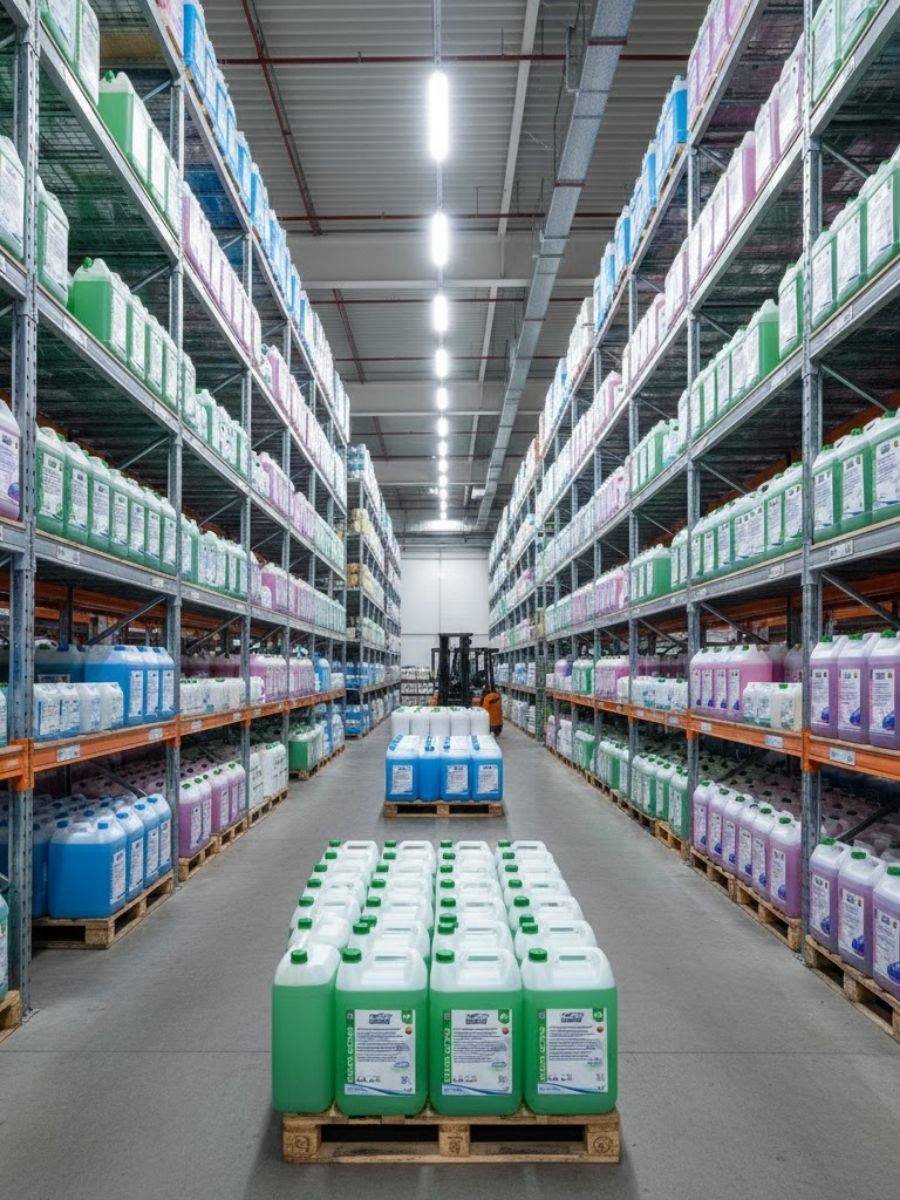
Liquid vs. Powder: The Eternal Question
As a technician, I see advantages in both, but the professional market has spoken.
Liquid Detergent is the current king in self-service laundries and hotels. Why? Because it allows automatic dosing. Using peristaltic pumps, the machine takes the exact amount it needs. It dissolves instantly, leaves no white residue on dark clothes, and is easy to store.
Powder Detergent (atomized) remains the best for very dirty white clothes and linens in pure industrial laundries. Whiteners and oxidizers are more stable in powder form. However, it can clog dispensers if water pressure is low and is more cumbersome to dose manually.
The Importance of Additives: It's Not Just Soap
A good industrial washing system isn't just one product. At LaColada, for example, we inject three different products in every wash:
- Base detergent: To clean general dirt.
- Active oxygen: An oxygen-based (non-chlorine) disinfectant and whitener that removes stains and bacteria without damaging colors.
- Neutralizing softener: In addition to giving scent and feel, it neutralizes the water's pH to prevent skin allergies.
Costs and Profitability: How much does it cost to wash?
Here is where industrial detergent wins by a landslide. A 20-liter drum of medium-high quality professional detergent might cost between €40 and €60. It seems expensive, but the dosage is usually about 5-8 ml per kilo of clothes.
This means washing a 10 kg load costs you cents in product. If you used domestic detergent for the same volume, the cost would triple, in addition to the technical problems due to excess foam I mentioned earlier.

Sebastián R.
More than 10 years at the helm of Lacolada Lavanderia Autoservicio Ponferrada and repairing industrial and domestic machinery in my spare time. You won't find unverified theories from the internet here, just real solutions tested by someone who gets their hands dirty every day.
Related Technical Articles

How to Make Laundry Soap: Is It Worth It?
We analyze homemade vs industrial soap options and what works best for heavy loads.
How to Make Homemade Fabric Softener
Learn about homemade softener solutions and whether they are suitable for high-performance washing.
How to Clean Washing Machine with Vinegar (and Combat Hard Water)
Water hardness affects detergent. Learn how vinegar can help maintain your machine against limescale.